
Building a home bar is about more than choosing the right glassware, spirits, mixers, or bar tools. One of the most important parts of a great drink station is something many people underestimate: ice.
Whether you are making cocktails, iced coffee, soda, sparkling water, whiskey drinks, mocktails, or party coolers, the amount of ice you need can add up quickly. A small countertop ice maker may be enough for occasional drinks, but if you host often or have a dedicated home bar, you may need more capacity.
So, what size ice maker do you need for a home bar?
For occasional use, a compact countertop ice maker may be enough. For frequent entertaining, family gatherings, office drink stations, garage bars, and dedicated home bars, a 100 lb/day undercounter ice maker is often a better balance of capacity, storage, and convenience.
In this guide, we will break down how much ice a home bar typically needs, compare different ice maker sizes, and explain when it makes sense to upgrade to a larger undercounter ice maker.
How Much Ice Does a Home Bar Actually Need?
Most people use more ice than they expect. Ice is not only used inside drinks. It is also used for chilling bottles, filling coolers, serving party beverages, keeping ingredients cold, and preparing drinks in batches.
A single cocktail, soda, iced coffee, or mixed drink can use anywhere from a small scoop to a full glass of ice. If you are making drinks for several people, the total amount of ice needed can increase quickly.
Here is a simple estimate:
| Use Case | Estimated Ice Need |
|---|---|
| Daily drinks for 1–2 people | 5–15 lb/day |
| Family use and iced coffee | 15–30 lb/day |
| Small home bar | 30–60 lb/day |
| Weekend parties | 60–100 lb/day |
| Frequent hosting, office, or café-style use | 100 lb/day or more |
These numbers are only estimates. Your actual ice needs depend on how many people you serve, the type of drinks you make, the size of your glasses, and whether you also use ice for coolers or food service.
If you only make a few drinks per day, a smaller ice maker may be enough. But if you regularly host guests or want ice ready throughout the day, a higher-capacity machine can make your home bar much more convenient.
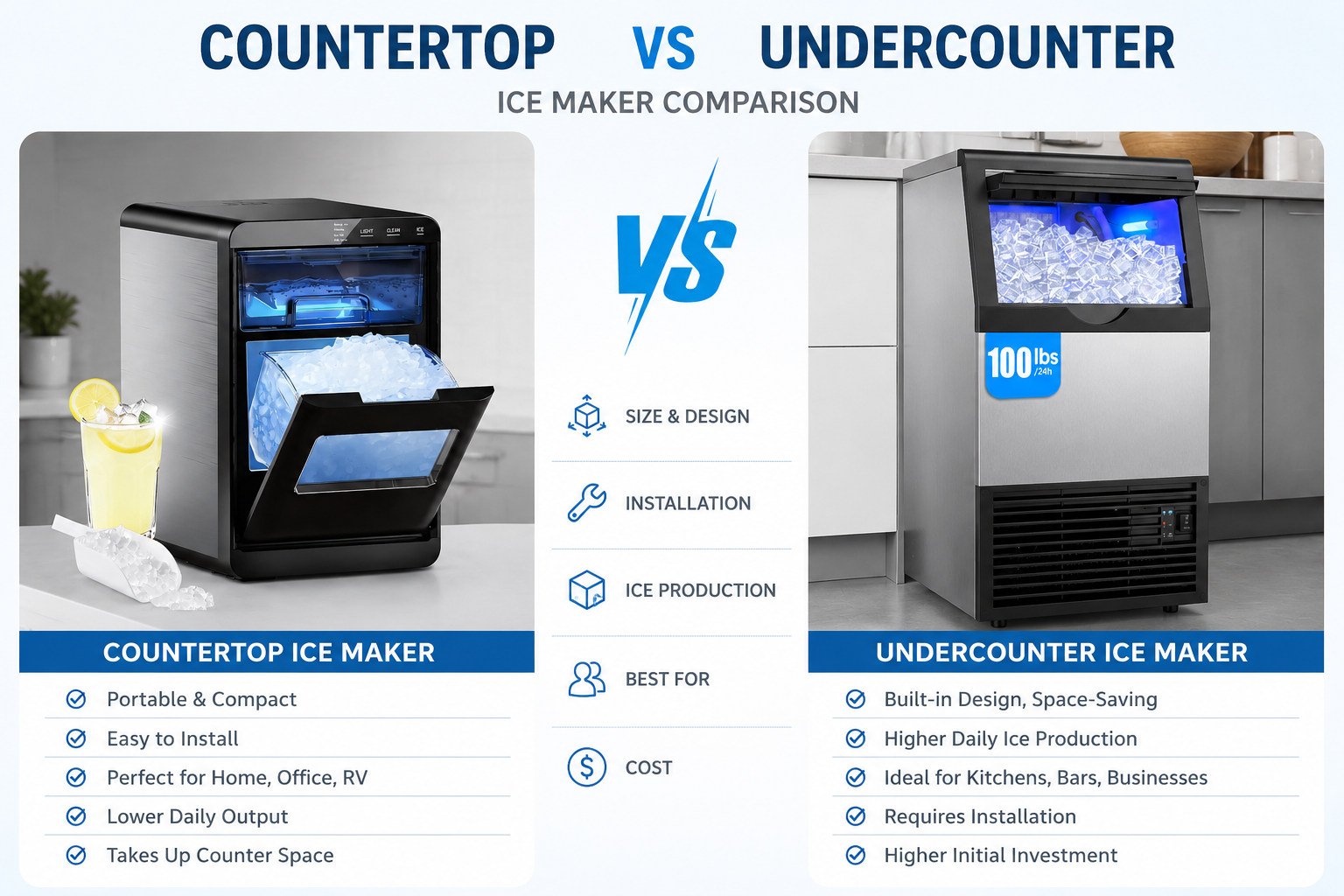
Countertop vs. Undercounter Ice Maker: What’s the Difference?
Before choosing the right size, it helps to understand the difference between a countertop ice maker and an undercounter ice maker.
Countertop Ice Makers
Countertop ice makers are compact, portable, and easy to place on a kitchen counter, bar cart, or small table. They are a good choice for people who need ice for daily drinks but do not want a built-in setup.
A countertop ice maker is usually best for:
- Small kitchens
- Apartments
- Occasional drinks
- Daily personal use
- Small households
- Users who do not want to connect a water line
However, countertop ice makers usually have smaller ice baskets and lower storage capacity. Many models also require manual water filling, which may not be ideal for frequent entertaining.
Undercounter Ice Makers
Undercounter ice makers are designed for more consistent ice production. They can be installed under a counter or used as freestanding machines, depending on the model and installation requirements.
An undercounter ice maker is usually best for:
- Home bars
- Kitchen islands
- Garage bars
- Game rooms
- Office break rooms
- Small cafés
- Party rooms
- Light commercial spaces
Because undercounter ice makers usually produce more ice and store more ice than countertop models, they are better suited for users who host often or need a steady supply of ice throughout the day.
Most undercounter ice makers require a water supply line, a drain connection, a grounded power outlet, and proper ventilation clearance. This makes installation planning important, but it also makes daily use much easier once the machine is set up.
Ice Maker Size Guide for Different Home Bar Setups
The right ice maker size depends on how you use your home bar. Here is a practical guide:
| Home Bar Type | Recommended Ice Maker Size | Best Fit |
|---|---|---|
| Occasional drinks | 26–44 lb/day | Countertop ice maker |
| Daily iced drinks | 44–60 lb/day | Larger portable ice maker |
| Weekend entertaining | 60–100 lb/day | Undercounter ice maker |
| Dedicated home bar | Around 100 lb/day | 100 lb undercounter ice maker |
| Home bar + office or small business use | 100–150 lb/day | Commercial ice maker |
For many homeowners, a 100 lb/day ice maker offers a strong middle ground. It gives you more capacity than a small countertop machine without requiring the larger footprint of a high-output commercial ice maker.
If your home bar is used only occasionally, you may not need 100 lb/day. But if you host friends, make drinks often, or want ice available for both daily use and parties, a 100 lb/day undercounter model can be a smart long-term upgrade.
Why a 100 lb/day Ice Maker Is a Smart Choice for Home Bars
A 100 lb/day ice maker is not just for restaurants or bars. It can also make sense for homes that use a lot of ice.
Enough Ice for Daily Drinks and Parties
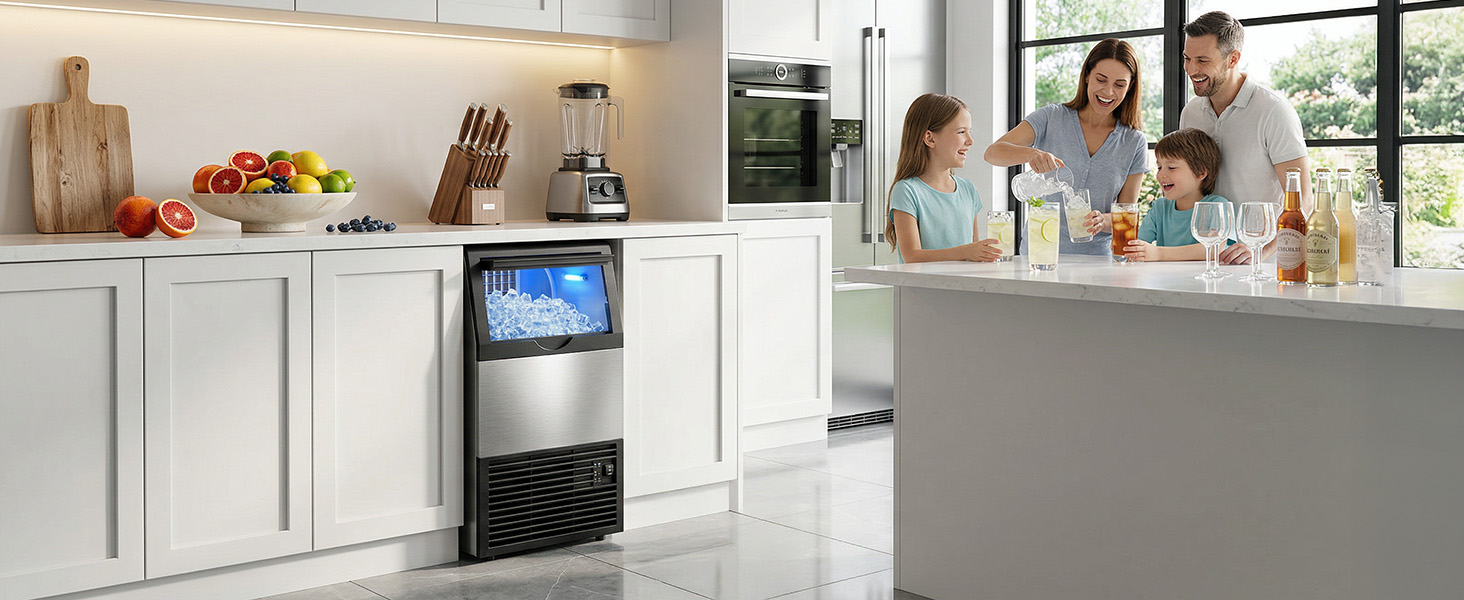
If you make cocktails, iced coffee, soda, tea, lemonade, sparkling water, or mocktails, you know how quickly ice disappears. A 100 lb/day ice maker gives you enough capacity for everyday use and weekend gatherings.
It is especially useful if your home bar is used for:
- Cocktail nights
- Family gatherings
- Backyard parties
- Game days
- Office events
- Garage bars
- Poolside entertaining
- Holiday hosting
Instead of buying bags of ice before every gathering, you can have fresh ice ready when you need it.
More Convenient Than a Countertop Ice Maker
A countertop ice maker may be convenient for light use, but it can become limiting when you need more ice. Smaller machines often require more frequent refilling, and their storage baskets may not hold enough ice for a group.
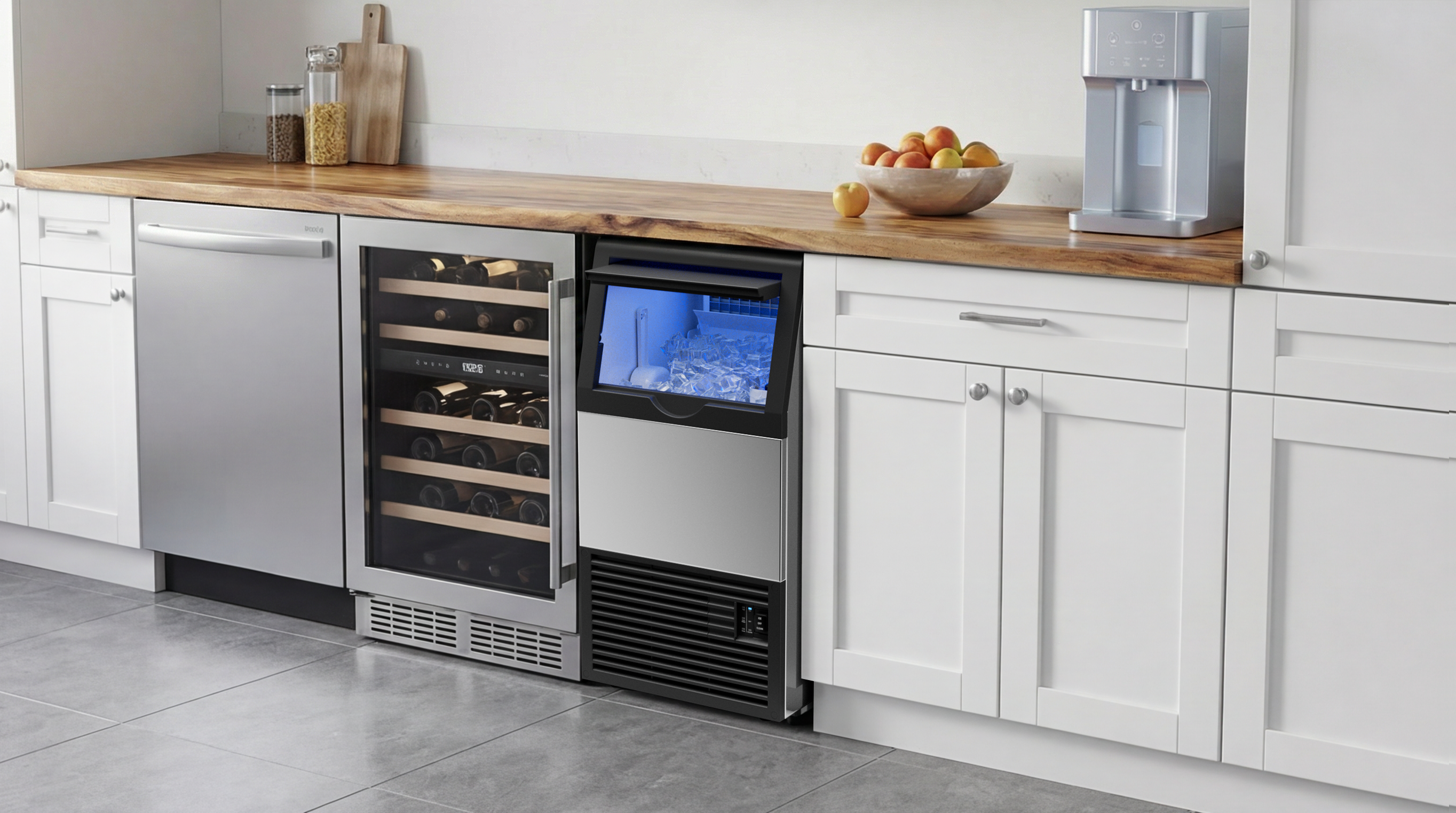
A 100 lb/day undercounter ice maker gives you more output and more storage, making it easier to serve guests without constantly checking the machine.
A Cleaner Look for Built-In Spaces
For a dedicated home bar, appearance matters. An undercounter ice maker can fit into a kitchen, bar, or entertainment area more naturally than a countertop unit.
A built-in or freestanding ice maker helps keep your counter clear while giving your drink station a more finished look.
A Good Balance of Size, Price, and Performance
A larger 150 lb/day or 250 lb/day commercial ice maker may be more than most home users need. A 100 lb/day model provides strong daily output while still fitting many home bar, office, and light commercial spaces.
That is why a 100 lb/day ice maker is often a practical choice for people who want more than a portable unit but do not need a large commercial machine.
What to Check Before Buying a Home Bar Ice Maker
Before buying an ice maker for your home bar, do not only look at daily ice production. You should also check installation requirements, storage capacity, ice type, and maintenance features.
Here is a simple checklist:
1. Daily Ice Production
Daily ice production tells you how much ice the machine can make in 24 hours under suitable conditions. For a dedicated home bar, look for a machine that can keep up with both daily drinks and occasional parties.
2. Ice Storage Capacity
Ice production is important, but storage capacity matters too. If the machine makes a lot of ice but stores only a small amount, you may still run out during busy use.
For example, a 33 lb insulated ice bin can help keep plenty of ice ready for drinks, gatherings, and daily use.
3. Water Line Requirement
Most undercounter ice makers are designed to connect to a water supply line. This allows the machine to make ice automatically without manual refilling.
Before buying, make sure your installation space has access to a cold water line.
4. Drain Requirement
Undercounter ice makers usually need a drain connection. The storage bin is typically insulated, not a freezer, so some melting is normal over time. Melted water needs to drain properly.
Check whether your space has a floor drain or suitable drain connection before installation.
5. Power Requirement
For home use in the United States, many buyers prefer a machine that works with standard U.S. electrical conditions. Check the voltage and frequency before buying.
For example, the Mojgar 100 lb/day Undercounter Commercial Ice Maker operates on AC 110V / 60Hz power.
6. Product Dimensions
Measure your cabinet opening or installation space before ordering. Leave enough room for ventilation, water connection, drainage, and service access.
7. Ice Type
Different ice types work better for different drinks. Clear cube ice is a versatile option for home bars because it works well for cocktails, whiskey, iced coffee, soda, tea, and coolers.
8. Cleaning and Maintenance
Look for features that make daily maintenance easier. One-touch self-cleaning can help simplify routine cleaning, especially if you use the machine frequently.
If your area has hard water, filtered water is recommended to help reduce buildup and improve ice quality.
What Type of Ice Is Best for a Home Bar?
Not all ice is the same. The best ice type depends on the drinks you make most often.
Clear Cube Ice
Clear cube ice is one of the most versatile choices for home bars. It is suitable for:
- Cocktails
- Whiskey
- Soda
- Iced coffee
- Iced tea
- Lemonade
- Coolers
- Everyday drinks
Clear cube ice looks clean, works well in many glass types, and is useful for both casual and premium drinks.
Nugget Ice
Nugget ice is soft, chewable, and popular for casual drinks. It is great for:
- Soft drinks
- Smoothies
- Crushed-style drinks
- Chewing ice
- Everyday refreshment
If you love chewable ice, a nugget ice maker can be a great addition to your kitchen or drink station.
Sphere Ice
Sphere ice is often used for whiskey, bourbon, and premium cocktails. It melts more slowly and creates a more elevated drink presentation.
For a dedicated home bar, clear cube ice is usually the most flexible everyday option, while nugget ice and sphere ice can be used for more specific drink preferences.
100 lb vs. 150 lb Ice Maker: Which Is Better for a Home Bar?
If you are comparing a 100 lb ice maker and a 150 lb ice maker, the decision comes down to daily demand, available space, and how often you serve large groups.
| Feature | 100 lb Ice Maker | 150 lb Ice Maker |
|---|---|---|
| Best For | Home bars, offices, cafés, parties | Restaurants, bars, higher demand |
| Space Needs | More compact | Larger footprint |
| Daily Output | Up to 100 lb/day | Up to 150 lb/day |
| Price | Usually lower | Usually higher |
| Recommended User | Frequent home use and light commercial use | High-demand commercial use |
For most home bars, a 100 lb/day unit is usually enough. If you run a busy restaurant, bar, or serve ice throughout the day, a 150 lb/day model may be a better fit.
If you are choosing for a home bar, office, or small entertaining space, the 100 lb/day size is often the better balance.
Recommended Home Bar Ice Maker
If you want more ice capacity than a countertop model but do not need a larger commercial machine, the Mojgar 100 lb/day Undercounter Commercial Ice Maker is a practical choice for home bars, offices, cafés, and entertainment spaces.
It is designed to deliver clear cube ice on demand while fitting into built-in or freestanding spaces.
Key features include:
- Up to 100 lb/day ice production
- 33 lb insulated ice storage bin
- First batch in as little as 8 minutes under suitable conditions
- Clear cube ice
- Adjustable ice thickness
- One-touch self-cleaning
- Built-in or freestanding design
- AC 110V / 60Hz standard U.S. power
- Suitable for home bars, offices, cafés, restaurants, and parties
If you host often, make drinks daily, or want a reliable ice source for your home bar, a 100 lb/day undercounter ice maker can help you avoid last-minute ice runs and keep your drink station ready.
CTA Button:
Shop the Mojgar 100 lb Ice Maker
Final Thoughts
Choosing the right ice maker for your home bar depends on how often you use ice, how many drinks you serve, and whether you want a portable or built-in setup.
For occasional drinks, a countertop ice maker may be enough. For daily iced drinks, a larger portable ice maker can work well. But for frequent entertaining, dedicated home bars, office drink stations, and party spaces, a 100 lb/day undercounter ice maker offers a strong balance of capacity, convenience, and space-saving design.
If you want clear cube ice ready for cocktails, iced coffee, soda, tea, and gatherings, the Mojgar 100 lb/day Undercounter Ice Maker is a practical upgrade for your home bar.
FAQ
Is a countertop ice maker enough for a home bar?
A countertop ice maker may be enough for occasional drinks or small households. For frequent hosting, parties, or a dedicated home bar, an undercounter ice maker with higher daily production is usually more convenient.
How many pounds of ice do I need for a party?
It depends on the number of guests, drink types, and whether you also use ice for coolers or serving. For weekend gatherings, many home bars may need 60–100 lb of ice per day.
Is a 100 lb ice maker too much for home use?
Not necessarily. A 100 lb/day ice maker can be a good fit for home bars, offices, party rooms, garage bars, and frequent entertaining spaces.
Does an undercounter ice maker need a water line?
Yes. Most undercounter ice makers are designed to connect to a water supply line. Before buying, make sure your space has access to a cold water line.
Does an undercounter ice maker need a drain?
Yes. A proper drain connection is usually required. The ice bin is insulated, not a freezer, so some melting is normal over time and melted water should drain properly.
What kind of ice is best for cocktails?
Clear cube ice is a versatile option for cocktails, whiskey, soda, iced coffee, tea, and everyday drink service.